
Limitations Are Creativity Boosters
One lens forces you to move. One amp forces you to use your fingers. One board forces you to commit to the line. The best work happens under constraint.
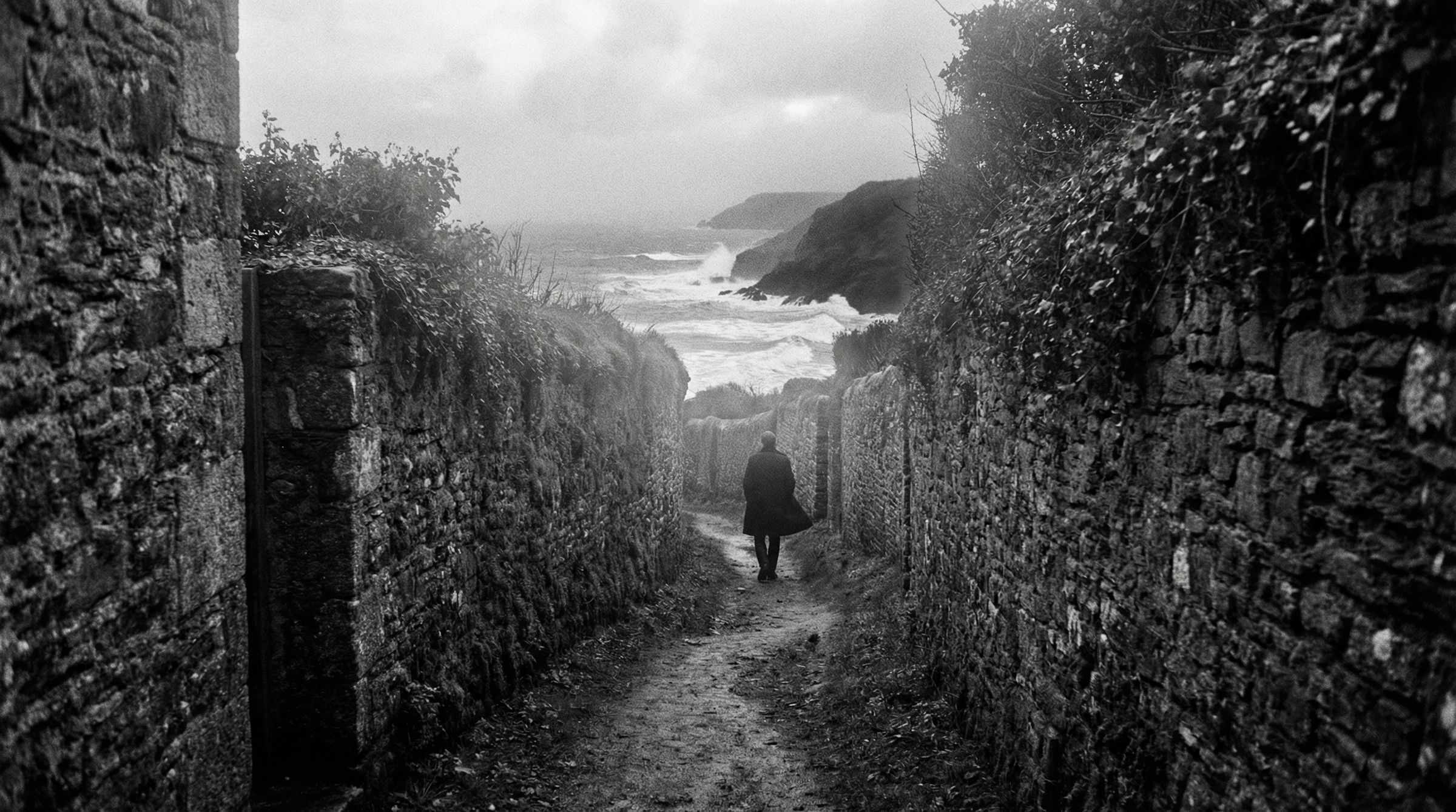
I own one lens. A Fujinon XF 35mm f/1.4 R on an APS-C body — 53mm equivalent field of view. Not wide enough to cheat with context. Not long enough to compress without consequence. I have shot this combination for years. Every time I consider adding a second lens, I stop. Not because I cannot afford it. Because the limitation is doing more work than a second lens ever would.
The 35mm f/1.4 forces me to move. If the frame is wrong, I walk forward. If there is too much in the scene, I get closer. If the background is distracting, I open the aperture to f/1.4 and let it dissolve. Every compositional decision starts with my feet, not the lens barrel. Zoom lenses teach you to stand still and adjust the optics. A prime teaches you to adjust yourself.
That is the whole principle. Constraint eliminates the decision and forces the adaptation.
The Pattern Across Domains
This shows up everywhere once you see it.
Angus Young’s rig is three components: Gibson SG, cable, Marshall. No pedalboard, no effects loop, no switching system. Fifty years. Over 200 million records. The constraint did not limit the music. It defined it. Every ounce of expression comes from his fingers, his picking dynamics, his volume knob. The amp does not have a clean channel and a dirty channel to choose between — it has one channel, turned up until the power tubes compress. The tone is a physical event, not a preset. Remove the constraint and you remove the identity.
A 6’2” single-fin does the same thing in the water. Three fins let you pump, carve, and redirect at will. A single fin commits you to the line. You read the wave before you drop in, pick your path, and ride it. If you picked wrong, there is no correction. The board does not pivot — it glides. The limitation forces you to read the water better before you stand up. Over time, that forced attention produces a surfer who sees the wave more clearly than the guy on a thruster who can adjust on the fly.
Twitter’s original 140-character limit produced a generation of writers who learned to compress. Not summarize — compress. Strip the idea to its essential structure, then express it in fewer words than your instinct says it needs. Some of the sharpest writing of the last fifteen years happened inside that constraint. When they expanded to 280 characters, the quality dropped. More space meant less discipline. The limitation was doing editorial work that the writer did not have to.
The three-minute pop song did the same for songwriters. You have 180 seconds. The hook has to land in the first thirty. The chorus has to arrive before the audience loses interest. The bridge has to justify its existence by reframing the entire song. Every section earns its place because there is no room for indulgence. “Bohemian Rhapsody” is the exception that tests the rule — and even Queen knew they were breaking a constraint, which is why the song works as provocation rather than indulgence.
The AI Parallel
I built Gizmo’s agent harness in native Swift. Not Python. Not the bloated Python AI toolkit with LangChain and vector databases and embedding pipelines and twelve layers of abstraction between the developer and the machine. Swift.
That constraint forced every architecture decision through a filter: can I build this with Apple’s native frameworks, or do I need to import the Python world’s dependency chain? NLTokenizer instead of spaCy. Core Data instead of Pinecone. NLTagger instead of a named entity recognition model that requires its own GPU allocation. Apple’s NLP stack instead of an embeddings pipeline.
The result is a retrieval system that runs locally, searches fast, requires no infrastructure, and achieves the same retrieval quality as systems with ten times the dependency count. Not because native frameworks are inherently better. Because the constraint forced me to find the simplest path that actually works, and that path turned out to be more elegant than the one I would have built with unlimited options.
Every dependency you add is a decision you deferred. Every abstraction layer is a hedge against the possibility that you might need something different later. Every option is an admission that you have not committed to how the system should work. The Python AI ecosystem has so many options that most developers spend more time choosing tools than building products.
One lens. One amp. One fin. One language.
The Mechanism
The psychology is straightforward. Constraint reduces decision fatigue. When you carry three zoom lenses, every scene presents a choice: which focal length, which perspective, which compression. The choice consumes attention. Attention spent choosing is attention not spent seeing.
With one focal length, the choice is already made. All your attention goes to the scene. Light, shadow, composition, timing — the things that actually make a photograph. The limitation does not subtract from the creative process. It subtracts from the administrative overhead that surrounds the creative process. What remains is the work.
This is not minimalism as aesthetic preference. It is minimalism as operational strategy. The photographer with one lens sees more because there is less between the eye and the subject. The guitarist with one amp listens more because there is less between the hand and the sound. The surfer on a single-fin reads the wave more because there is less between the body and the water.
Constraint is not the enemy of creativity. It is the condition for it. The work gets better when the options get fewer. Every domain teaches this. Most people learn it in none of them.
More from this domain

25 Aug 2026
PhotographyThe Case for Printing
The screen is a proof. The print is the photograph. An image that only ever lived on glass is unfinished work — a mix you never bounced.
24 Jul 2026
PhotographyHow to Read Light
Reading light is a trained skill, not luck. You see the finished frame before you raise the camera — the same way you read a set before it stands up.
16 Jun 2026
PhotographyThe GFX Question
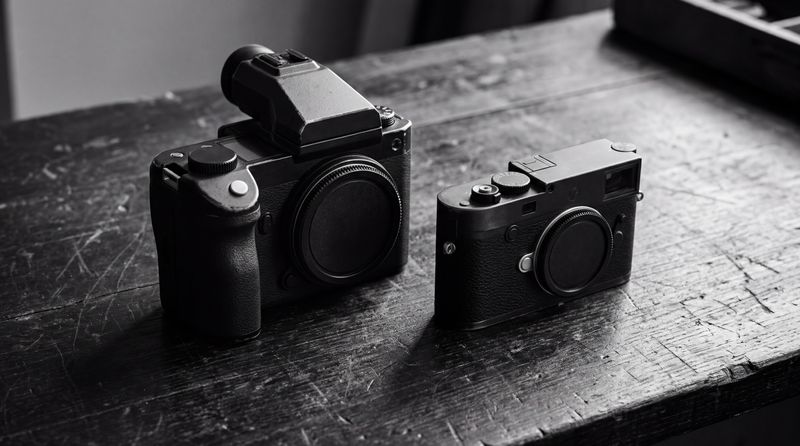
The GFX 100S is not a better X-E5. It is a different instrument, and I keep the X-E5 anyway.