
How to Read Light
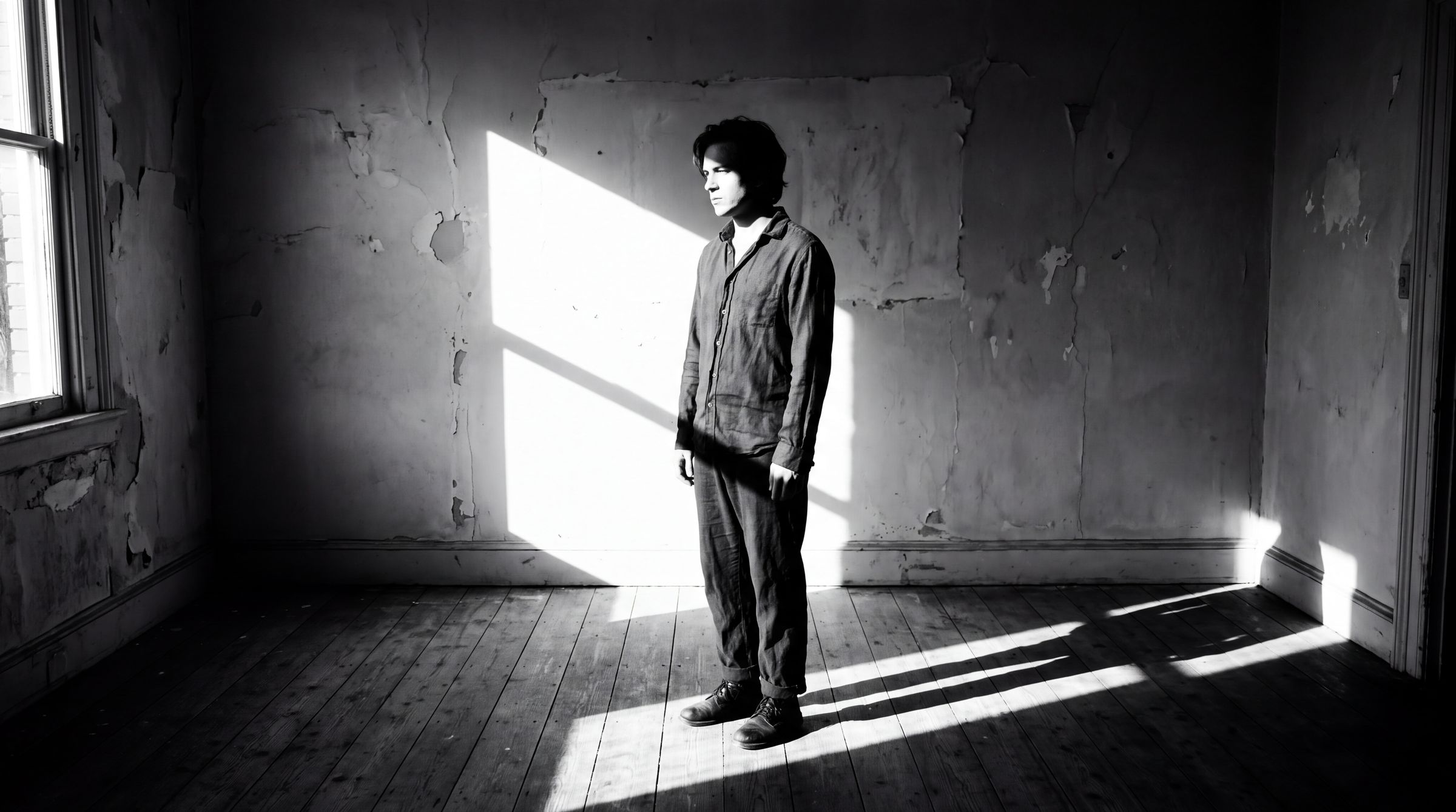
Reading light is a trained skill, not luck. You see the finished frame before you raise the camera — the same way you read a set before it stands up.
The light I wanted showed up at 7:42 and held for maybe ninety seconds. I was above the point at Coxos at 7:30, camera already set — 1/500s, f/5.6, ISO 200 — because I had read it coming the evening before. Low cloud offshore, a clearing gap to the east, an offshore wind holding the faces open. When the sun cut under the cloud deck it came in almost flat from behind the headland and lit the spray blowing back off every wave, so each set line glowed for a second before it folded over. I made four frames. Then it was gone.
That was not luck. Luck is standing in the same spot at 7:50 wondering why the water looks flat.
Reading light is a skill you train, the same way you train reading a wave. And it starts with a claim most people find uncomfortable: you should see the finished photograph before you raise the camera. Ansel Adams called that visualization. In The Negative (1981) he defined it as “a conscious process of projecting the final photographic image in the mind before taking the first steps in actually photographing the subject.” The “pre-” in “pre-visualization” is a later gloss — usually credited to Minor White, and one Adams himself is widely reported to have found redundant. The word matters less than the discipline behind it. You decide what the print will be, then you go make the negative that delivers it.
Adams lived it. Yosemite, 1927, “Monolith, the Face of Half Dome.” Mid-exposure he swapped a yellow filter for a dark red one — not because the scene changed, but because he had begun to see, in his own account from his 1985 autobiography, the finished print he wanted: a brooding cliff against a near-black sky. The red filter killed the blue, dropped the sky, and delivered the image in his head instead of the image in front of the lens. He called it his “first true visualization.” He did not react to the light. He read it, then bent it to a picture that already existed in his mind.
Here is the mechanism, stripped of romance. Light is not random. It has a source, an angle, a color temperature, and a diffuser — cloud, haze, a wall, the sea surface. All of it is predictable to anyone who watches it long enough. Side light at a low angle carves texture because shadows run long. Overcast is a giant softbox — flat, even, forgiving, dull. A gap in a cloud bank is a spotlight on a timer, and you can see the timer if you look at the sky instead of the ground. Reading light means running that forward: not “what does this look like now” but “what will this look like in six minutes, and where do I need to stand.”
That is exactly reading a wave. You do not chase the wave that is already breaking — you read the sea state, the period between sets, the way the swell stands up over a specific patch of reef, and you paddle to where the wave will be, not where it is. By the time you can see it break, you are too late. Same with light. By the time the frame is obvious to everyone on the cliff, it belongs to the person who was already standing in the right place with the right exposure dialed.
Different photographers read at different speeds. Henri Cartier-Bresson read in fractions of a second — a 35mm Leica rangefinder, a 50mm lens by widely reported account, and a nervous system tuned to the instant a composition resolves. In a 1957 interview he described “a creative fraction of a second when you are taking a picture… Once you miss it, it is gone forever.” The English title The Decisive Moment was pinned on his 1952 book by the American publisher, not by him — his own title was Images à la Sauvette. But the reading is the same act, fast: the geometry and the light lock for an instant, and you either see it coming or you don’t.
Saul Leiter read slow. His Early Color work (Steidl, 2006), shot 1948 to 1960 across everything from an Argus C3 and a Rolleiflex to a Leica M3 from 1954, is mostly rain, steam, fogged glass, and light bleeding through weather on New York streets. Nobody stumbles into those frames. You learn to see a red umbrella glowing through a wet windshield because you have spent years learning what happens to color and contrast in that exact condition. “I don’t have a philosophy,” he said. “I have a camera. I look into the camera and take pictures.” The reading was so deep it stopped looking like effort.
Fast or slow, it is the same discipline: perception trained until prediction feels like instinct. I read light on the X-T5 with the same part of my brain that reads a swell chart and the sea at dawn. Watch the source. Run it forward. Be standing where the picture will be.
The camera does not see the light. You do. The camera only writes down what you already read.
More from this domain
25 Aug 2026
PhotographyThe Case for Printing
The screen is a proof. The print is the photograph. An image that only ever lived on glass is unfinished work — a mix you never bounced.
16 Jun 2026
PhotographyThe GFX Question
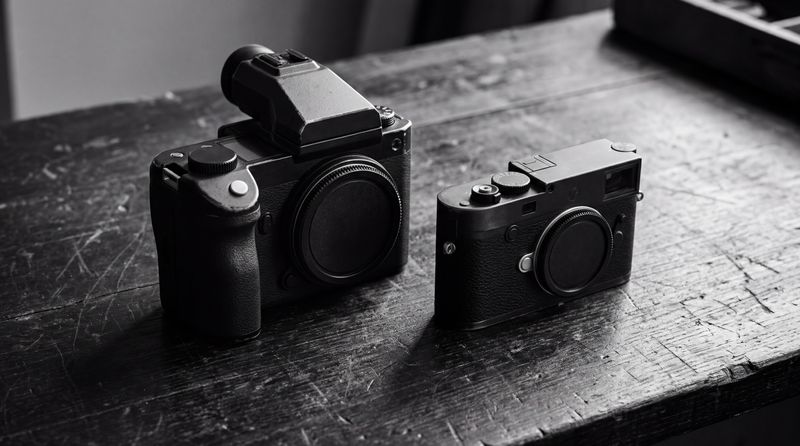
The GFX 100S is not a better X-E5. It is a different instrument, and I keep the X-E5 anyway.
22 May 2026
PhotographyOcean Photography Is Not Surf Photography
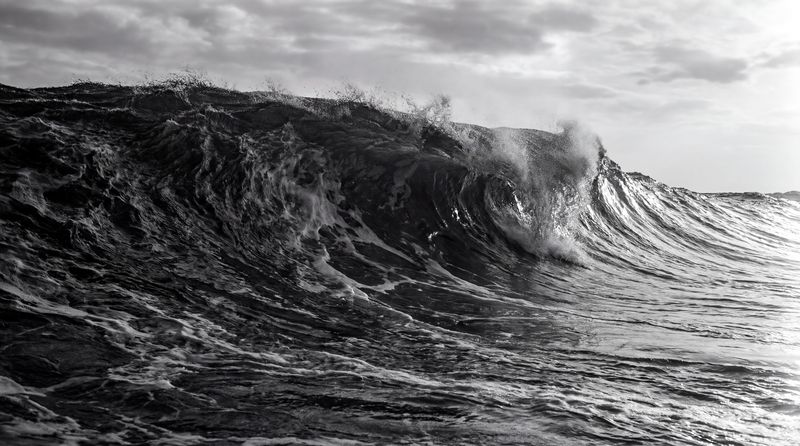
The ocean is a subject that demands the same reading as the wave you paddle for. Shutter speed decides what the water is allowed to be.