
The Case for Printing
The screen is a proof. The print is the photograph. An image that only ever lived on glass is unfinished work — a mix you never bounced.
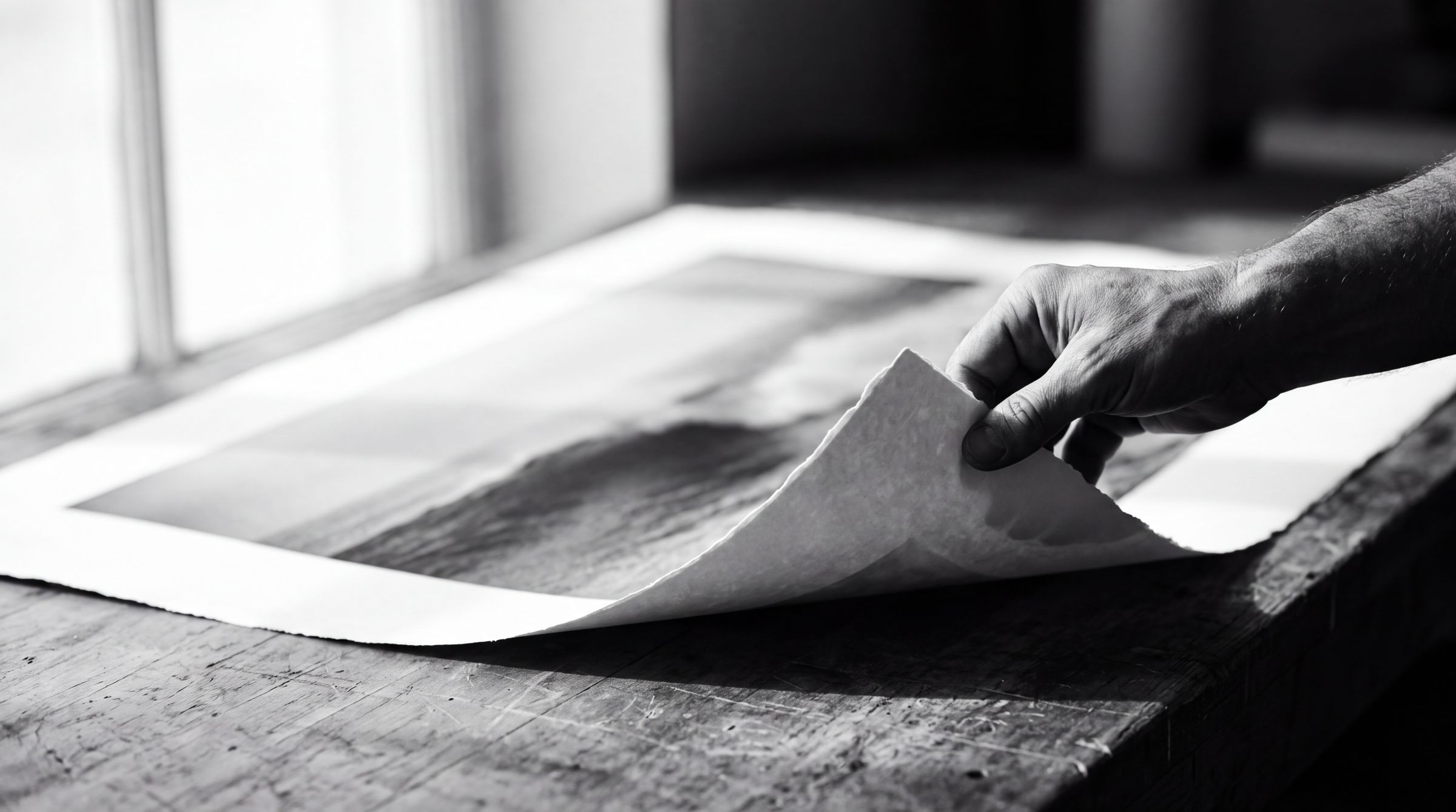
The image on your screen is not a photograph. It is a proof.
A proof is what you pull before you commit the run — a rehearsal, a thing you study to decide whether the real object is worth making. The screen is exactly that. Backlit, calibrated to nobody’s wall, gone the instant the laptop sleeps. It shifts with the ambient light in the room and the brightness slider under your thumb. Two people never see the same file. It is where you decide the photograph is ready. It is not the photograph.
I print. On an Epson SureColor P900 — a 17-inch desktop pigment machine running the UltraChrome PRO10 ink set: ten pigments, two of them dedicated blacks, Photo Black for gloss and a separate Matte Black that swaps in when the paper changes. Max resolution 5760 x 1440. Onto Hahnemühle Photo Rag: 308gsm, 100% cotton, matte surface, 0.48mm thick, acid-free and calcium-carbonate buffered. Specs that mean nothing until the sheet is in your hand. Then they mean everything.
Here is what the numbers actually do. Pigment sits on the cotton instead of soaking through it, so the blacks hold density and the shadows keep their separation — no muddy collapse where the darkest tones smear into one. The 308gsm weight is why the print behaves like an object and not a receipt; it has a spine, it stands when you lean it, it takes the light of the room instead of throwing its own back at you. Matte cotton has no backlight to flatter it. Every tonal transition you got right shows. Every one you faked shows too. That is the point. The paper is honest in a way the screen structurally cannot be.
Ansel Adams built an entire book around this — The Print, Book 3 of the Adams photography trilogy, after The Camera and The Negative, published by Little, Brown with the New York Graphic Society. The order is the argument. Capture is Book 1. The print is where it ends. Adams put the idea more precisely than the version everyone quotes: “I have often said that the negative is similar to a musician’s score, and the print to the performance of that score. The negative comes to life only when ‘performed’ as a print.” Not “the negative is the score, the print is the performance” — that is the pop compression. Adams’ own sentence carries the load-bearing word: performed. A score in a drawer is not music. A file on a drive is not a photograph. It is potential energy waiting for someone to spend it.
I know this from the other side of the glass too. Seven-plus years in studios taught me that a mix which lives only in the session file is not finished — it is a set of intentions. You bounce it. You commit the automation, the sends, the ride on the vocal, into one stereo file that no longer has a mute button. The moment you print the mix, you find out what you actually made. Every “I’ll fix it in the render” reveals itself. Printing a photograph is the identical act. Ink onto cotton is the bounce to tape. The undo history ends at the edge of the sheet.
This is why I distrust the folder named later. A drive of ten thousand images nobody has ever printed is not an archive — it is a stack of unbounced mixes, unshipped code, decisions postponed until they rot. The camera did its work. The photographer stopped one step short of the only step that makes it real. An image seen by no one, in no form you can hold, changes nothing and finishes nothing. If it isn’t used, it doesn’t exist.
The permanence is the quiet proof the loop is closed. Epson’s own numbers, tested by Wilhelm Imaging Research and framed for prints displayed indoors, under glass, project up to 200 years before the color fades and up to 400 for black and white. Those are manufacturer estimates from accelerated-aging models, not a print anyone has watched for two centuries — but the direction is what matters. You are not making a file that a format change orphans in fifteen years. You are making an object built to outlive the machine that made it, the drive it came off, and probably you.
Print small if you must — I run most work at 8x10 on the P900, not gallery-wall sizes. The size is not the case. The commitment is. The screen asks nothing of you; you can keep scrolling, keep deferring, keep the options open. The print asks you to decide, and then it holds you to it.
Stop calling the file a photograph. It is a proof of one.
Pull the print, or admit you never finished.
More from this domain
24 Jul 2026
PhotographyHow to Read Light
Reading light is a trained skill, not luck. You see the finished frame before you raise the camera — the same way you read a set before it stands up.
16 Jun 2026
PhotographyThe GFX Question
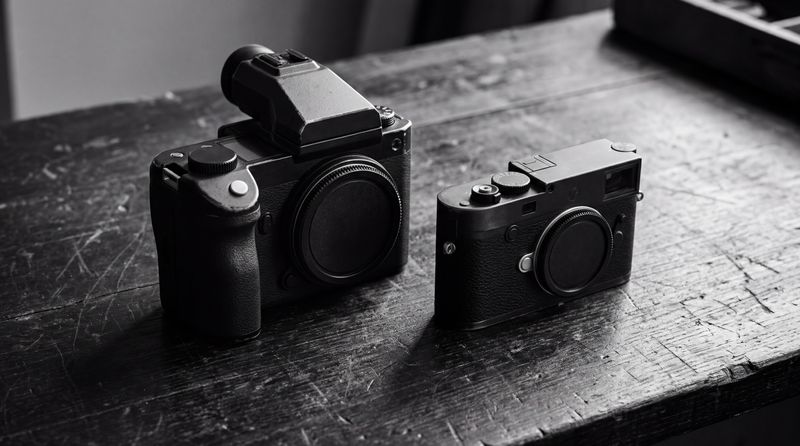
The GFX 100S is not a better X-E5. It is a different instrument, and I keep the X-E5 anyway.
22 May 2026
PhotographyOcean Photography Is Not Surf Photography
The ocean is a subject that demands the same reading as the wave you paddle for. Shutter speed decides what the water is allowed to be.