
Ocean Photography Is Not Surf Photography
The ocean is a subject that demands the same reading as the wave you paddle for. Shutter speed decides what the water is allowed to be.
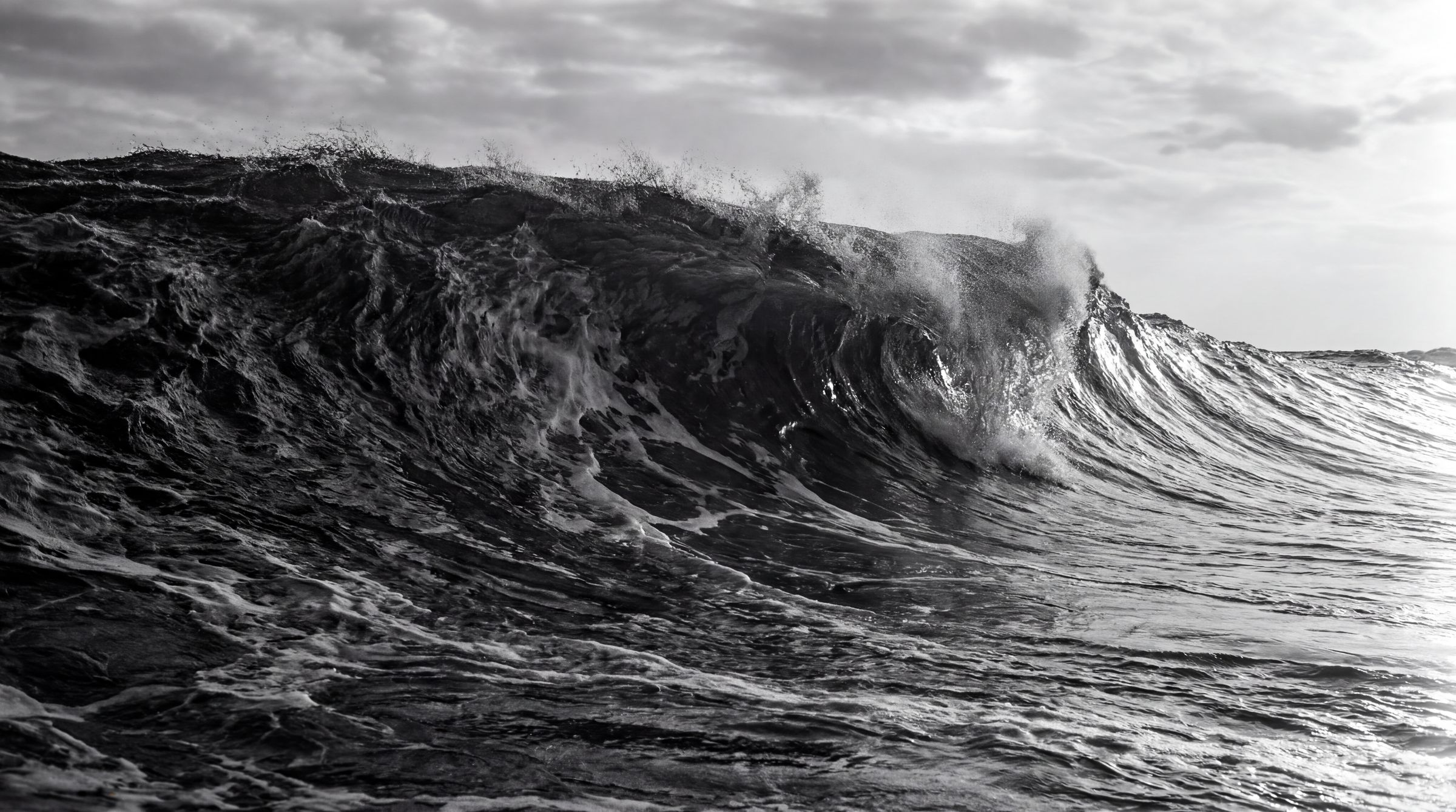
Surf photography points the lens at the surfer. The wave is scenery, cropped to frame the turn. Ocean photography points the lens at the water and waits for the water to become something. Those are two different acts, and the second one is harder, because the subject does not perform on cue and cannot be asked to run it again.
I shoot the Atlantic off Ericeira with a Fujifilm X-E5 and one lens, the XF 35mm f/1.4 R — a 53mm-equivalent field of view. No 400mm surf-photog cannon. No water housing built to chase a bottom turn. That is the tell. I am not there for the athlete. I am there for the light on the face of a wave nobody will ride, and the only way to get it is to wade in to my knees and stand at conversation distance with the ocean.
The whole thing is a reading problem, and I already know the grammar because I surf the same water.
Reading swell direction from the sand is the same skill whether you are choosing a wave to drop into or a wave to photograph. A west swell wraps into the point differently than a northwest one. The set that stands up cleanest arrives maybe one in twelve, and if you have spent thousands of dawns in the lineup, you feel the interval before you can count it. Surfing taught me the difference between a wave worth riding and a wave worth watching. The camera cares about the second kind. The one that jacks up, holds its shape for a half-second longer than physics seems to allow, and throws a lip the low sun can burn through. You cannot ride that one and shoot it. You pick a side. On the sand, with the X-E5, I finally get to keep the ones I used to have to let go.
Then the mechanism, because this is where the craft actually lives: shutter speed is not an exposure setting here. It is a decision about what the water is allowed to be. At 1/1000s the lip freezes — every thrown droplet suspended, the wave turned to glass and violence, sharp enough to count the spray. At 1/4s the same wave dissolves into a low fog, foam smeared into a soft field, motion made visible by erasing the edges. Same wave. Two photographs that argue with each other. The 1/1000s frame says the ocean is a structure. The 1/4s frame says the ocean is a process. I decide which is true before the set arrives, because after it arrives there is no time to decide anything.
For the ones that move — a wall running down the line, whitewater charging the lens — AF-C on the X-E5 tracks the approaching face while I hold the frame. Golden hour on the Atlantic gives maybe forty minutes when the light rakes across the water at an angle low enough to model the swell, turning a flat grey ocean into ridged relief. Ray Collins built a whole monograph, Water & Light, on exactly that window — the ocean lit from the side until it stops looking like water and starts looking like moving stone. Not action. Attention.
None of this is content. The photograph of a wave is not a deliverable for a feed. It is an observation of a thing that happened once, to that water, in that light, and will never happen the same way again. That is why it demands the same discipline as the wave itself: you show up daily, you read the conditions, you wait for the one that matches, and you are good enough to be ready when it comes. Most days you get nothing worth keeping. That is not failure. That is the price of the one frame that is.
Surf photography needs a surfer. Ocean photography only needs the ocean, and the patience to treat it like it was never yours to arrange.
More from this domain

25 Aug 2026
PhotographyThe Case for Printing
The screen is a proof. The print is the photograph. An image that only ever lived on glass is unfinished work — a mix you never bounced.

24 Jul 2026
PhotographyHow to Read Light
Reading light is a trained skill, not luck. You see the finished frame before you raise the camera — the same way you read a set before it stands up.
16 Jun 2026
PhotographyThe GFX Question
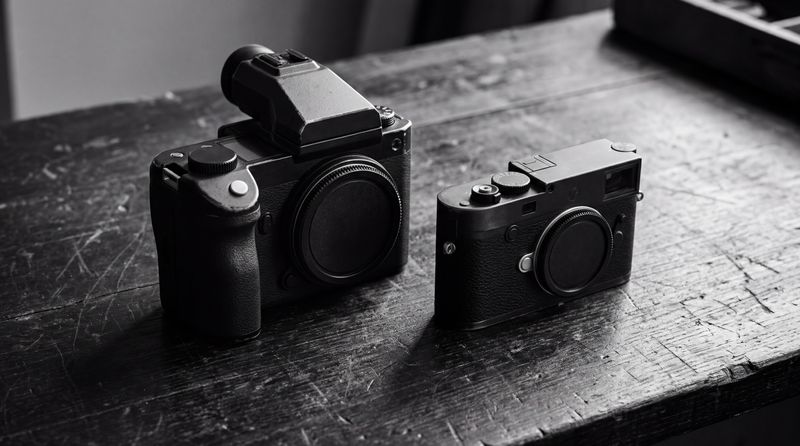
The GFX 100S is not a better X-E5. It is a different instrument, and I keep the X-E5 anyway.