
The Sound of 80s Arena Rock
The rack-effects era gave guitarists total signal control and homogenised arena rock tone in the process.
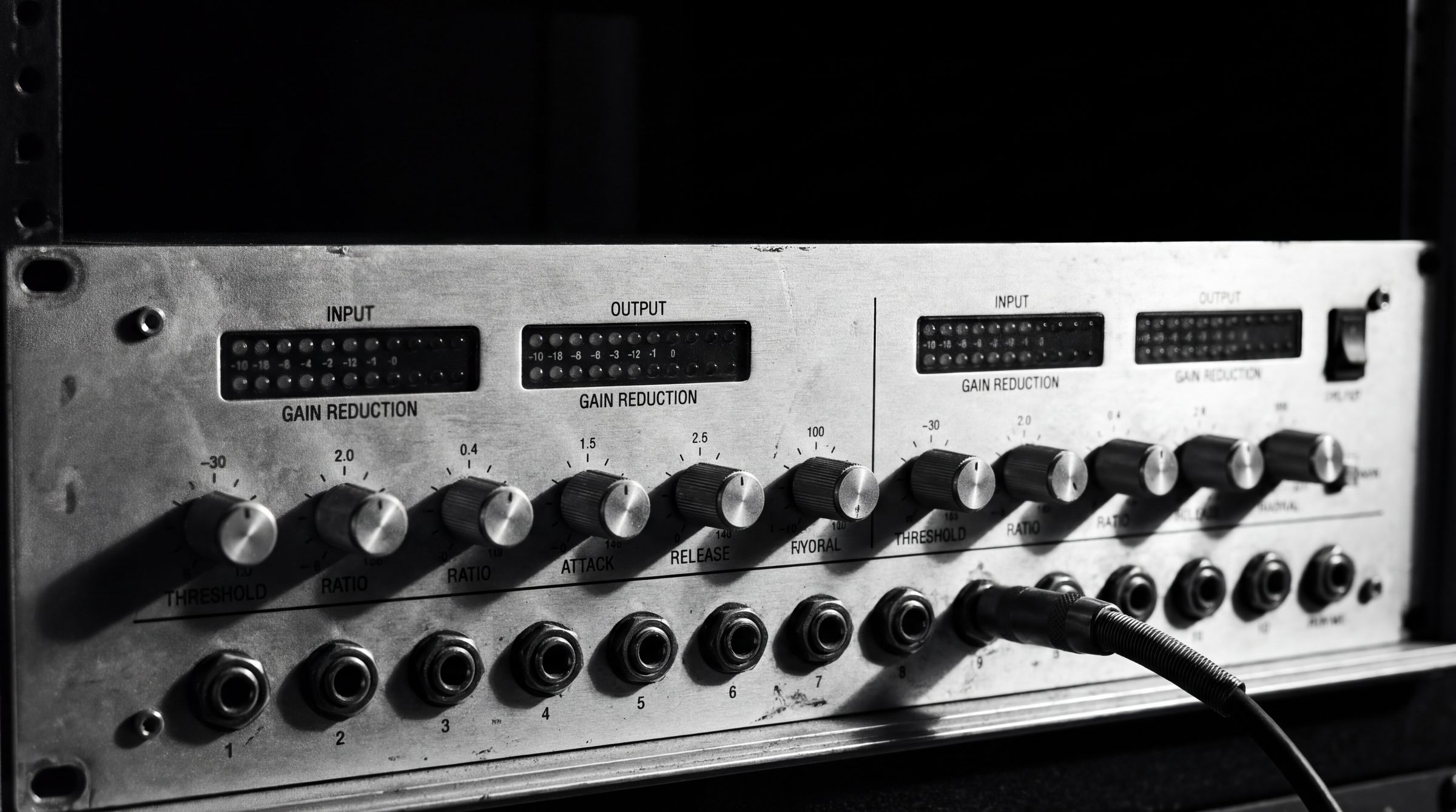
Def Leppard started recording Hysteria in 1984. Mutt Lange produced the album through to its release in 1987 — over three years of layering, re-recording, and obsessive compression. The budget exceeded anything a rock record had cost before. The guitar tones on that album were processed through rack-mounted signal chains so complex that recreating any single track required a wiring diagram, not a settings sheet. The album sold over 20 million copies and stands as the definitive document of what happens when you give a producer absolute control over every parameter of a guitar’s output.
The guitars on Hysteria are perfect. They are also dead.
That sentence is not nostalgia. It is a signal-chain analysis. And understanding why it is true requires understanding what happened to electric guitar between 1984 and 1990 — the rack era, when the pedalboard gave way to the processor, and the relationship between player and amp was replaced by the relationship between player and algorithm.
Before the rack, a guitarist’s tone lived in three places: the pickups, the cable, and the amp. A Les Paul Standard with PAF humbuckers into a Marshall JCM800 2203 — that was the signal chain for half the guitarists who mattered. The 2203’s single-channel gain structure meant you committed to a saturation level and worked everything else with your hands. Dig into the strings harder, the note bites. Back off, it cleans up. The amp responded to the player’s touch because there was nothing between the player and the amp to interfere.
The dynamics were not a feature. They were the physics. An unprocessed guitar signal carries an enormous dynamic range — the difference between a whispered chord and a hard-picked power chord is measured in real voltage swings hitting real tubes. The amp translates that voltage into tone. Loud and soft. Bright and dark. Aggressive and gentle. All from the same knob settings, all from the player’s hands.
The rack changed the equation.
Starting around 1983, professional guitar rigs migrated from pedalboards to rack-mounted processors. The TC Electronic 2290 gave delay times programmable to the millisecond — 99 presets, MIDI-switchable, studio-grade converters in a 1U rack unit. The Eventide H3000 Harmonizer offered pitch-shifting, modulation, and harmonic generation that no stompbox could touch. The Yamaha SPX90 delivered multi-effects processing for under a thousand dollars, which meant every working guitarist could afford rack-grade processing. The Lexicon PCM70 added reverb algorithms so detailed they replaced the room itself. And the Boss SE-50, cheaper still, brought the full rack experience to players who could not justify the Eventide or the Lexicon.
By 1986, the standard arena rock rig was a JCM800 (or a Mesa/Boogie Mark III, or a Soldano SLO-100) feeding into a rack of processors before hitting the power amp and speaker cabinet. Steve Lukather’s rig — documented in multiple Premier Guitar features — was one of the most elaborate: multiple rack units, a switching system that could recall entire signal-chain configurations per song, and a level of tonal control that studio engineers envied.
The precision was real. Vai sculpted harmonics on the H3000 that existed nowhere in rock guitar before him. Satriani programmed delay patterns on the TC 2290 that became compositional elements, not effects. Yngwie Malmsteen — for all his classical pretensions — ran a signal chain calibrated with the specificity of a recording console.
But the processors compressed the signal before it reached the power amp.
This is the mechanism that matters. A rack processor — any rack processor, whether a delay, a harmonizer, or a multi-effects unit — operates on the guitar signal at line level. It applies gain staging, A/D conversion, processing algorithms, and D/A conversion. Every stage introduces its own noise floor, its own compression characteristics, its own dynamic ceiling. The wide dynamic range that a raw guitar signal delivers to an amp input gets compressed significantly by the time it exits the rack. The whisper and the scream start to sound the same.
This is not a subjective complaint about vintage warmth. This is measurable signal degradation. The pick attack — the transient spike where a guitarist’s identity lives, the thing that makes Slash sound different from Vai even when they play the same note on the same fret — gets levelled by the rack’s cumulative gain structure. The processor does not know the difference between Angus Young’s attack and anyone else’s. It processes the voltage. The voltage comes out even.
And so the arena rock tone homogenised.
By 1987, a blind listening test across the guitar tones on major arena rock records would reveal startlingly similar spectral profiles. Different guitarists, different amps, different rack units — same dynamic envelope. The processor was the great equaliser (in the worst sense of the word). The more options the rack offered, the more every guitarist converged on the same processed tone. More control produced less variety. That is the central irony of the rack era.
The counterexample was always there. Angus Young: SG Standard, cable, Marshall. No rack. No processor. No MIDI. The tone on For Those About to Rock and Flick of the Switch is raw, dynamic, and identifiable from the first chord because nothing stands between Angus’s pick and the speaker cone. Slash: Les Paul, Alnico Pro II (7.9 kΩ, vintage output), JCM800 with the gain past seven. The Appetite for Destruction tone breathes because the pickup sends an uncompressed signal into a tube amp that responds to touch. Gary Moore: Les Paul Standard, cranked 1959SLP Plexi, vibrato that comes from his hands, not from a Yamaha SPX90 chorus patch.
The feel players did not reject the rack because they were luddites. They rejected it because they understood — intuitively or deliberately — that the relationship between their hands and the amp was the tone. Everything between the hands and the amp was a tax on that relationship.
Mutt Lange spent over three years and an enormous budget processing Hysteria into a sonic monument. It remains one of the best-selling rock albums ever made. The guitar tone is pristine, layered, controlled to the last millisecond of delay tail.
It is also the sound of a decade that traded the player-amp conversation for a player-processor monologue. The rack era gave guitarists more control than they had ever had. And in doing so, it compressed the one thing that made each of them different: the dynamics between their hands and the circuit that turned voltage into sound.
Control is not tone. The space between the pick and the speaker — unprocessed, unpredictable, alive — is where tone lives. The 80s rack era proved it by destroying it.
More from this domain
4 Sept 2026
MusicPAF: The Pickup That Should Not Exist
Gibson printed the wrong patent number on its own legendary pickup for years. The PAF fails every modern QC test — and that failure is the tone.
3 Aug 2026
MusicThe Accidental Circuit
The Neve 1073 is the most worshipped preamp in recording, and the sound everyone chases is a defect its own designer set out to engineer away.
1 Jul 2026
MusicThe Floor Under House Music
The TR-909 and TB-303 were flops. That is the reason house exists — I can trace the whole genre to a supply chain of failed gear.