Did You Lose the Surfing Etiquette?
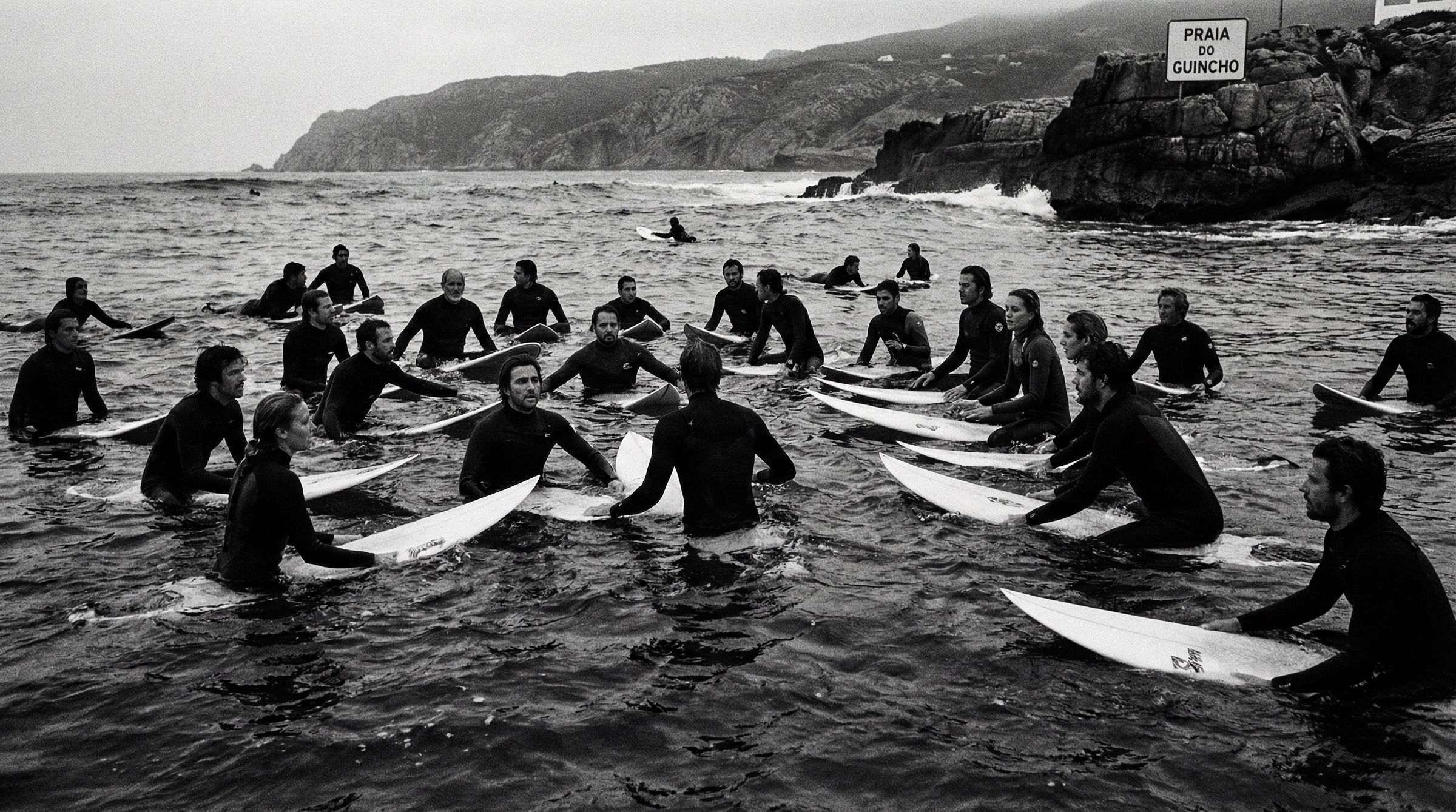
The lineup has rules. They are not posted. They are earned through presence. The surf boom brought crowds who never learned the code.
A guy dropped in on me at Coxos last week. Shoulder-high, clean, offshore, one of those days the reef produces maybe fifteen times a year. I was deepest — closest to the peak, up first, committed to the drop. He was ten metres down the line, paddling for the same wave, looking straight at me. He saw me. He went anyway.
I pulled off. Not because I had to — I had priority, I had the right, and frankly I had the skill to make the section and force him out. I pulled off because two surfers on a critical section of a reef break is how people get hurt. Fins to faces. Boards to ribs. Skulls to reef. The wave is not worth a hospital visit.
He rode it to the inside, kicked out, paddled back to the lineup grinning. No acknowledgement. No apology. No awareness that he had violated the single most fundamental rule in surfing.
I have been surfing since I was eleven. Thirty-plus years in the water. The rules of the lineup are older than I am and they exist for one reason: so nobody dies.
The Code
The rules are simple. They are not written on signs because they are not suggestions — they are physics translated into protocol.
Drop-in priority. The surfer closest to the breaking part of the wave has the right of way. Not the surfer who paddles hardest. Not the surfer who arrived at the beach first. Not the surfer with the most expensive board. The surfer in the deepest position — the one whose takeoff point is closest to where the lip throws — goes. Everyone else pulls back. This is not courtesy. This is collision avoidance. Two surfers on the same wave, on the same section, cannot coexist. One of them eats a rail to the head.
Do not snake. Snaking is paddling around someone to steal their inside position after they have already established priority. It is the lineup equivalent of cutting a queue — except the queue is moving at 15 miles per hour and the consequences of conflict are physical. A snake in the lineup is not just rude. A snake is a safety hazard.
Do not paddle through the impact zone. When you are paddling back out after a wave, go around. Paddle to the channel — the deeper section where waves do not break — and come back to the lineup from the side. Paddling straight through the break zone puts you directly in the path of surfers riding waves. They cannot stop. They cannot steer around you fast enough. You become an obstacle on a highway.
Respect the locals. The surfers who ride a break every day — who know the reef, the currents, the takeoff spots that shift with tide and swell — have earned their position through years of presence. This is not gatekeeping. This is institutional knowledge. The local knows that the takeoff on Coxos shifts fifteen metres north on the mid-tide push. The local knows that the current pulls south at three knots when the swell hits eight feet. The local knows where the reef is shallowest and which section will close out on a west swell. Ignoring the locals is not just disrespectful — it is dangerous ignorance.
Wait your turn. The lineup operates on rotation. You paddle out, you wait, you take your wave, you paddle back out, you wait again. Catching three waves in a row while ten surfers sit inside you is not assertive. It is greed. And greed in the lineup, like greed everywhere, eventually gets corrected — just less politely than in a boardroom.
What the Boom Broke
Surfing had a boom. COVID pushed people outdoors. Surf schools multiplied. Board sales spiked. Ericeira, where I live, went from a quiet European surf town to a destination with peak-season crowds that rival the Gold Coast. The number of surfers in the water tripled in five years. The number of surfers who learned the code did not triple. It barely moved.
The surf schools teach the popup. They teach the paddle. Some of them teach how to read a wave — where to sit, when to go. Almost none of them teach the code. Drop-in priority is mentioned in passing, the way a driving school mentions right-of-way — technically covered, never really learned until someone nearly hits you.
The result is lineups full of surfers who can stand on a board but cannot read a lineup. They do not know who has priority. They do not know where the channel is. They do not understand that the local sitting fifty metres deeper than them is not “hogging waves” — he is sitting in the correct position because he has the skill and the knowledge to surf that section of the reef.
I watch it every session now. Drop-ins. Snaking. Surfers paddling straight through the break zone with their eyes on the horizon, oblivious to the surfer on the wave bearing down on them at full speed. These are not malicious people. They are untaught people. And the ocean does not distinguish between malice and ignorance when it distributes consequences.
Every Craft Has an Unwritten Code
This is not unique to surfing. Every discipline with physical stakes has unwritten rules that exist because the written ones are not enough.
In a music studio — a real studio, the kind with a live room, a control room, and a console that costs more than a house — the code is immediate. Do not touch another player’s amp settings. Do not move a microphone after the engineer has positioned it. Do not play when someone else is tracking. Do not offer unsolicited feedback on another musician’s part. These rules are not posted on the wall. They are understood by every professional who has done session work, because violating them wastes time, damages trust, and can ruin a take that cost everyone in the room an hour of concentration.
In code, the unwritten rules serve the same function. Do not push to main without testing. Do not merge without review. Do not deploy on a Friday (and if you do, stay awake to fix what breaks). Do not refactor a module someone else is actively working on without telling them first. Every experienced developer knows these rules. Every junior who ignores them learns why they exist — usually at 2 AM, staring at a production incident.
The pattern is always the same. The unwritten code exists because the craft has stakes. Surfing has physical stakes — broken bones, lacerations, drowning. Music production has economic and creative stakes — a ruined session, a broken relationship with a studio. Software has operational stakes — downed systems, lost data, eroded trust.
The people who ignore the code have not earned the right to be there. Not because they lack talent. Because they lack the hours. The code is not arbitrary — it is the compressed wisdom of every mistake made by every practitioner who came before. It cannot be downloaded. It cannot be taught in a weekend certification. It can only be absorbed through presence, through time, through watching and failing and being corrected and eventually understanding why the rule exists, not just that it does.
Localism Is Not the Answer
I need to be honest about the other side. Localism — the aggressive enforcement of territorial claims on surf breaks — is real, and some of it is ugly. Locals who assault visitors. Locals who slash tyres. Locals who enforce a pecking order that has nothing to do with safety and everything to do with tribalism. I have seen it in Bali. I have heard the stories from the North Shore. Ericeira has its own quieter version.
That is not what I am defending. Aggression is not etiquette. Violence is not code. The moment the rules are enforced with intimidation instead of earned respect, they stop being a code and become a protection racket.
The distinction matters. The code is: wait your turn, respect priority, do not endanger others. The corruption of the code is: this is our wave, you are not welcome, leave or suffer. One is safety and respect. The other is thuggery wearing cultural clothing.
The code I am arguing for is the one that keeps everyone in the water safely. It does not require localism. It requires learning. It requires the same thing every craft requires: humility in the presence of a discipline that existed before you arrived and will exist after you leave.
The Culture Is the Code
The surf boom is not going away. The crowds are permanent. Ericeira will not become quiet again. The question is whether the new surfers will learn the code or whether the code will erode under the weight of numbers.
I am not optimistic. The incentive structures are wrong. Surf schools optimise for volume, not depth. Instagram optimises for spray, not positioning. The culture increasingly rewards the visible — the air, the floater, the spray on the lip — and ignores the invisible: the positioning, the patience, the decision not to go on a wave because someone else had priority.
The invisible stuff is the craft. The spray is the output. Without the craft, the output is just a body on a wave, going where physics takes it, unaware of the code that holds the whole thing together.
Lose the code, lose the culture. The wave does not care. But the lineup does.
More from this domain
20 Aug 2026
OceanThe Wave That Never Reads You Back
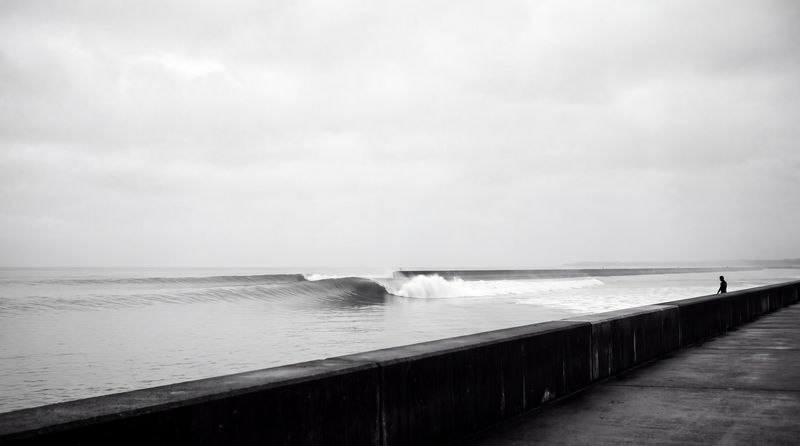
A soliton is a wave engineered to never change. That is the point of Surf Ranch — and the exact reason it can teach a turn but never teach the ocean.
14 Jul 2026
OceanReading the Swell Before It Arrives
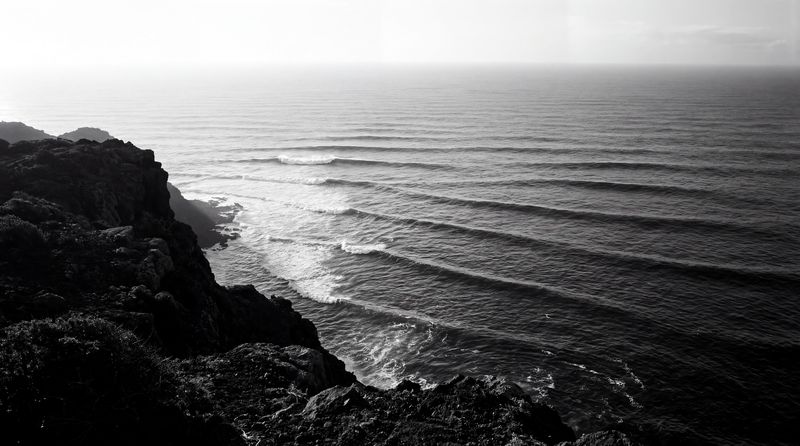
I check the 5am forecast half-asleep — and the math behind it was written in 1947 to put landing craft on a beach under fire.
26 Jun 2026
OceanThe Fin Setup Nobody Owns
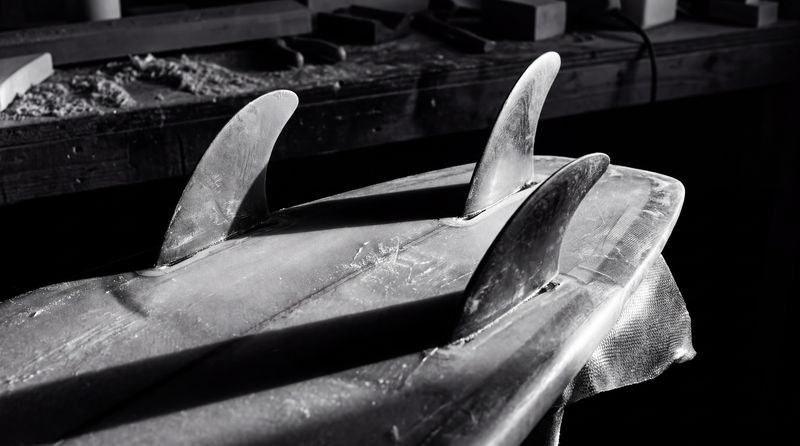
Every board at Ribeira d'Ilhas ran three fins this morning. Mine too. Simon Anderson drew that setup in 1980 and never owned a cent of it.